


As a 21-year-old college senior, Olivia Sardina sat in the Maryville University locker room, laced up her cleats and mentally prepared for her first ever playoff game.
Sardina, a graduate of Holt High School, played for the Wentzville lacrosse program beginning at age 13, but she never experienced a high school playoff game due to exclusionary policies put into effect by the former governing body, the Missouri Scholastic Lacrosse Association (MSLA) girls division.
“I remember feeling, ‘This was what I have been working my whole life for, but what do I have to do to get ready for this moment?’” Sardina said.
Fox lacrosse senior Clare Keys faces the same future. Keys is committed to play at Benedictine College, the defending NAIA national champions, yet she will not experience a playoff game until she arrives on campus due to the same restrictive rule.
“To have that experience under my belt, to feel that pressure, I wish I could experience that before I get there,” Keys said.
Players from Fox and Wentzville will spend another postseason sidelined from the Missouri girls lacrosse playoffs this May, since their teams are not sponsored by an individual school district and thus considered “club teams.”
The decision of MSLA to exclude “club teams” from playoff competition was an attempt to pressure individual school districts to sponsor lacrosse programs, with the hope of reaching 50 school-sponsored teams.
Girls lacrosse, long referred to as an “emerging” sport by the Missouri State High School Activities Association (MSHSAA), must be sanctioned by at least 50 schools in three board districts for two consecutive years to fall under the MSHSAA umbrella – a bylaw passed by the member schools of MSHSAA.
The MSLA rule helped push the number of school-sanctioned lacrosse programs into the 30’s, and In 2016, there were 39 girls lacrosse programs registered with MSHSAA. Ten years later, there are 37. The number reached 41 in 2024, but has remained stagnant for a decade.

In comparison, girls flag football is a true “emerging” sport. It is already sanctioned in 53 schools and will have a MSHSAA-governed state tournament in the near future. Girls flag football will most likely play its regular season in the spring, the same season as girls lacrosse, and will be an attractive alternative for lacrosse players from “club teams” who would like a chance to compete in a postseason.
One argument used to justify the continued exclusion of Fox and Wentzville from playoff competition is that they are actually – inclusive. As ‘club teams,’ they may include players from nearby schools that do not have lacrosse programs. Fox lacrosse has players from Seckman, a few from Windsor and one from Festus. Keys attends Chesterton Academy.
“I love how unified and welcoming they are. They immediately made me feel like part of the team,” Keys said.
Essentially, Fox and Wentzville are banned from the playoffs because they can roster players from outside their school area. Meanwhile, 13 private schools will participate in the girls lacrosse postseason.
“It’s disappointing. We put in all this effort for the entire season and then it just ends,” Fox senior captain Elayna Birschbach said. “Then, during club season in the summer, my friends from private schools ask each other, ‘How did your playoffs go?’ I sit there and think, ‘Oh yeah, we don’t do that.’ I still don’t understand why, because we play those teams during the season, just not in the playoffs.”

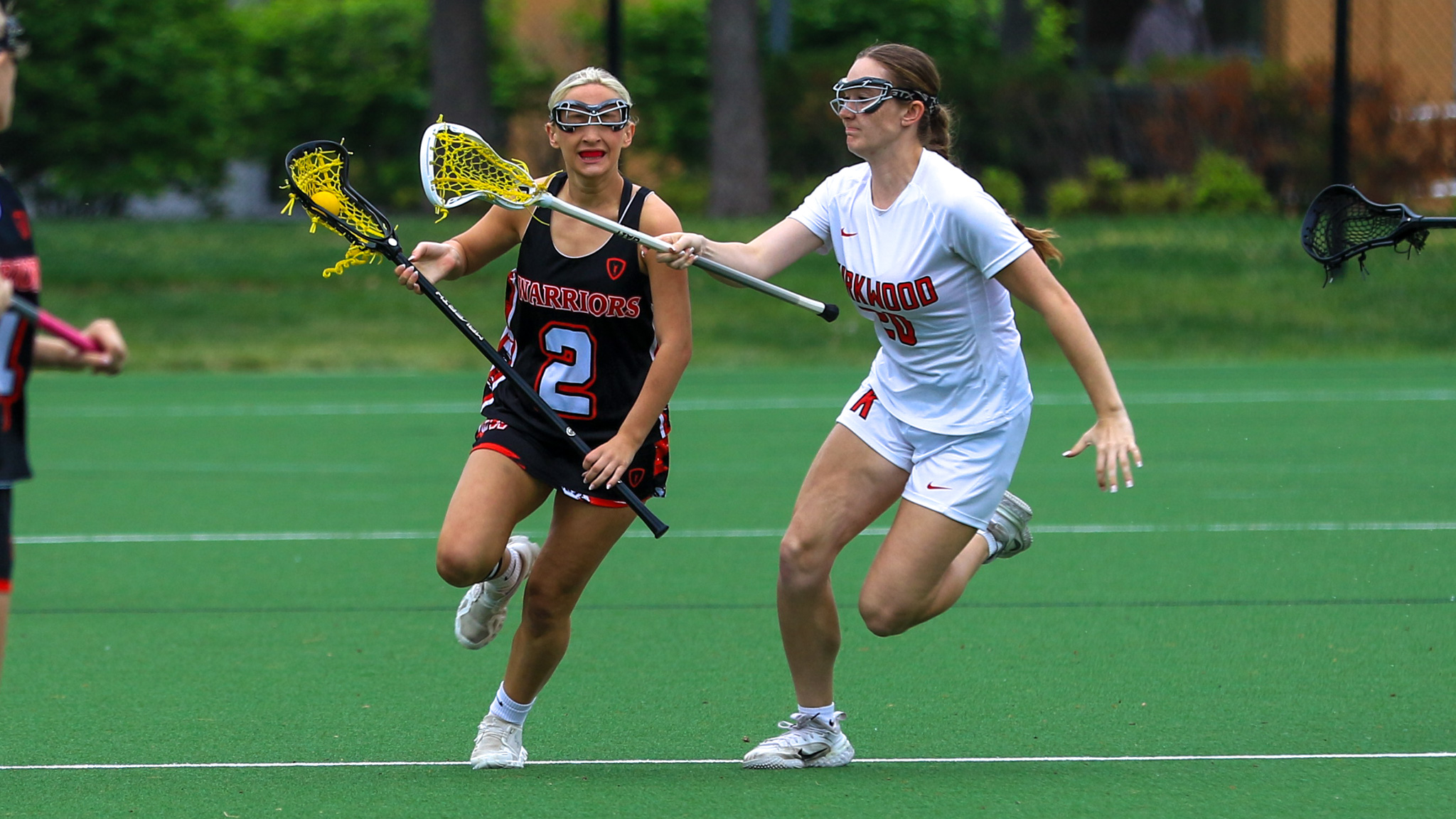
In a game at Kirkwood on April 15, Fox trailed 6-1 before rallying to tie the score, then trailed again 15-9 before slicing the deficit to two goals in the final minute.
“We have gotten so good with our attitudes. Whenever we’re down (on the scoreboard), we don’t let it get to us and we don’t get mad at each other. We believe in each other so much, and that’s something we’ve really worked on this season,” Birschbach said.
But for Fox players, valuable lessons learned throughout their season cannot be applied in the postseason. Fox senior captain Izabella Frissell believes that the playoff experience, including the tearful heartbreak shared after a postseason loss, should be a protected part of the student-athlete journey.
“I also play volleyball and basketball, so I get the chance to play my heart out and have a ‘win-or-go-home’ experience,” Frissell said. “In lacrosse, I don’t get that. It’s a bummer, especially since it’s my last season and it’s the last sport I’ll ever play. I don’t get the chance to win and keep going – or lose and it’s over.”

Proponents of a postseason ban for Fox and Wentzville suggest that “club teams” gain a competitive advantage since they are not sponsored by an individual school district.
Fox lacrosse holds its practices at a local middle school and has no bus transportation to or from games. Program director Rob Nash is often seen painting lines, restringing nets or welding a goal that has come apart. The lacrosse program uses no indoor facilities, such as a weight room, and has no athletic department budget to purchase uniforms, equipment or to pay its coaches.
“I buy them lunch,” said Nash, who has not taken a coaching salary since 2008.
Sardina recalled her Wentzville practices taking place in a baseball outfield with players arriving 30 minutes early to set up portable goals and map out a field with cones.
“The good ‘ol days,” Sardina said with a laugh.
Coaches like Nash, Kelley Lowry at Wentzville and Bob Panke at the former Zumwalt United (2021-23) are the kind of builders the sport needs as it expands to areas like Jefferson County and St. Charles County, yet their efforts are punished with a postseason exclusion that has no end in sight.
Sardina, a graphic designer, still gives back to the game she loves by coaching club lacrosse for St. Louis Samarai. She wishes that the lessons learned in high-stakes playoff games were a part of her high school experience.
“I never really learned the champion mindset that comes from playing in a playoff game until college,” Sardina said. “Understanding that mindset has had a huge effect on me becoming a coach.”

In St. Louis, a small group of athletic directors now oversees the sport of high school girls lacrosse. Although MSHSAA gives the sport ’emerging’ status, it has no input in the rules that govern it, including the playoff bans of Fox and Wentzville.
In western Missouri, the Kansas City Girls Lacrosse League (KCGL) is the governing body. The KCGL consists of 14 teams from Kansas and Missouri. Some are school-sanctioned and some are “club teams,” with the top 12 teams in the standings competing in a postseason tournament.
Inclusion in the KCGL playoffs is based on overall record, not whether players can persuade their school board to sanction a lacrosse program. League commissioner Kevin Switzer hopes that girls lacrosse will one day become a MSHSAA-sanctioned sport but understands that it is likely in the distant future.
In the meantime, the KCGL aims to be inclusive and inviting in an attempt to grow the sport at the individual level.
“We remain committed to supporting growth throughout the entire metro area,” he said.
Part of Switzer’s vision for growth is collaborating with the St. Louis region to create a true Missouri state tournament or a St. Louis vs. Kansas City All-Star Game.
“Bringing the two regions together would help elevate the sport statewide, showcase the talent emerging from Missouri and strengthen the case for broader recognition,” he added.
But before cross-state collaboration can happen, and before state-wide growth can take place, the St. Louis region must remove the exclusionary policies in its own backyard that endanger the sport of girls lacrosse from going from emerging, to submerging status.
“If we want girls to be committed to the sport of lacrosse, we should be doing whatever it takes to make that happen,” Sardina said.
Including Fox and Wentzville in the lacrosse postseason is a good place to start.